
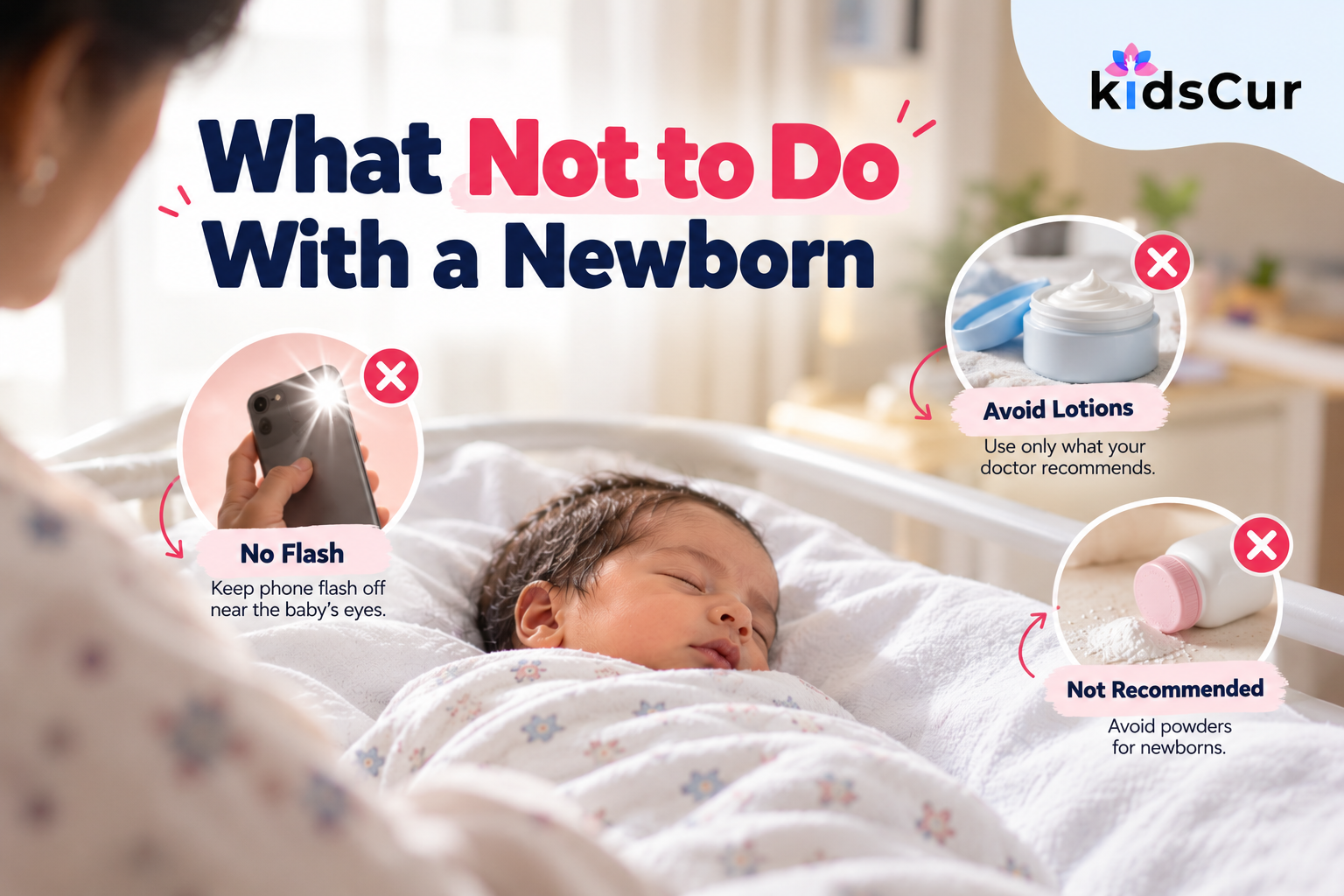
Knowing what not to do with a newborn is the first step to keeping your baby safe, especially in Indian homes where relatives, festivals, and traditions shape daily care. In this guide you will learn why common habits like flash photos and lip kisses can harm a baby, how to avoid them, and what to do instead. Each point has a short answer first, then a simple fix you can start today.
Everyday Habits That Look Harmless
1. Why Is Flash Photography Bad for a Newborn?
A newborn’s eyes are very sensitive to sudden bright light, so a flash close to the face can startle the baby, cause crying, and break their sleep. With every visitor clicking pictures in the first weeks, this adds up quickly, and doctors advise against direct flash near a newborn’s eyes.
How can you take photos safely? Shoot near a window in soft daylight with the flash switched off, and keep the camera a little distance away. Choose a time when the baby is awake and calm, and politely tell guests that no-flash is the house rule.
2. Don’t Kiss the Baby on the Lips or Face
Kissing a newborn on the lips or face is best avoided. An adult can carry germs without any symptoms, and cold sore virus, cold, flu, and stomach infections can pass through a kiss. A newborn’s immune system is not ready to fight them, and a herpes infection in the first weeks of life can be very serious.
How can you show love instead? Use gentle touch on the feet, talking, singing, and skin-to-skin contact with the parents. Ask visitors to wash their hands before holding the baby and to avoid kissing the face and hands. Saying “no kisses for now, please” is care, not rudeness.
3. Is Loud Noise Harmful to a Newborn?
Yes, sudden or very loud noise can harm a newborn. Loud music at functions, firecrackers during festivals, a blaring TV, sudden clapping, or shouting can startle the baby, disturb sleep, and make them cry. Very loud or repeated noise can also affect developing hearing.
What should you do at home? Normal household sounds are fine, so there is no need for complete silence. Keep the TV and speakers at a low volume, celebrate and burst crackers away from the baby’s room, and avoid sudden loud shouting close to the baby. Soft lullabies or a steady, quiet fan sound can help the baby settle.
4. Don’t Blow Air Into the Baby’s Face, Ears, or Nose
A playful puff on the face may bring a smile, but it can make a newborn gasp, choke, or startle. Breath also carries moisture and germs, and the ears and nose are delicate. The same caution applies to putting oil, drops, or home remedies into the ears or nose without a doctor’s advice.
How can you play with your baby safely? Use eye contact, smiles, and soft talking. If the nose seems blocked or something seems wrong with the ears, see your pediatrician rather than trying a home fix.
5. Can You Use Lotion, Cream, Powder, or Oil on a Newborn?
Only if the doctor recommends it. A newborn’s skin is thin and absorbs what is put on it. Many products labelled “baby” contain fragrance or ingredients that can cause rashes, and gift packs, neighbours’ tips, and advertisements often lead to several products being used at once. Powder can also be inhaled. You can read more in our newborn skin care guide.
How should you choose a product? In the first weeks, a plain bath with clean warm water and soft cotton is usually enough. Before using any lotion, cream, powder, soap, or massage oil, ask your pediatrician to recommend one specific product. Introduce one product at a time, test a small patch first, and stop at the first sign of redness.
Make parenting easier with the KidsCur app. Get trusted newborn care guidance in one place, so you are not searching late at night.
6. Don’t Put Kajal or Surma in the Baby’s Eyes
Applying kajal is a common tradition meant to protect the baby, but homemade kajal can carry germs that cause eye infections. Some traditional kajal and surma products have also been found to contain lead, which the World Health Organization warns is harmful, especially for young children.
What can families do instead? Keep anything out of the baby’s eyes. If the family wants to keep the tradition, ask the doctor about a skin-safe option away from the eyes, and gently explain to elders that the baby’s safety comes first.
7. Don’t Toss the Baby in the Air or Bounce Roughly
Elders and older children often lift and toss a baby up in joy, but a newborn’s neck muscles are weak and the brain is delicate. Sudden jerks or a slip can cause serious injury.
How should you hold and play with a newborn? Always hold the baby securely with one hand supporting the head and neck. Play with gentle swaying, singing, and face-to-face talking instead, and make this rule clear to every family member, especially children.
Want more parenting tips every day? Follow KidsCur on Instagram for quick newborn care tips, myths explained, and parenting advice.
Follow us on Instagram
Three Health Tips Every New Parent Must Know
8. How Should a Newborn Sleep Safely?
On their back, on a firm, flat surface. Sleeping on the stomach, or on pillows and soft mattresses, raises the risk of Sudden Infant Death Syndrome (SIDS) and suffocation, and shared family beds with heavy blankets add to the risk. The American Academy of Pediatrics explains this in its parent’s guide to safe sleep.
What should the sleep space look like? Keep it free of pillows, bolsters, and loose blankets, and keep the baby’s cot or bassinet in your room. Never sleep with the baby on a sofa or armchair. See our safe sleep for newborns guide for a full checklist.
9. Never Ignore a Fever in a Baby Under 3 Months
Call the doctor or go to the hospital straight away. In babies under 3 months, even a mild fever can signal a serious infection, and the baby may still look fine, so waiting a night to see if it settles is risky.
What counts as a fever and what should you avoid? A temperature of 100.4°F (38°C) or higher needs urgent care, and you should not give fever medicine on your own first. Also seek help if the baby is unusually sleepy, feeding poorly, breathing fast, or has fewer wet diapers.
10. Can You Give Water, Honey, Ghutti, or Gripe Water to a Newborn?
No. A newborn needs only breast milk or formula for the first six months, as the World Health Organization recommends. Water can upset the baby’s balance of salts, and honey can cause infant botulism, so the CDC advises against giving it before one year.
What can you do if the baby seems gassy or fussy? Hold the baby upright after feeds, burp gently, and ask the pediatrician before using any remedy, including ghutti or gripe water. Read our newborn feeding guide for more.
Frequently Asked Questions
What should you not do with a newborn in the first month?
Avoid flash photos, kissing the face or lips, loud noise, blowing air into the face, tossing the baby, and using any lotion, cream, or oil without a doctor’s advice. Also avoid stomach sleeping and giving anything other than milk.
Why do doctors say not to kiss a newborn?
Because a newborn’s immune system is still developing, and common viruses, including the cold sore virus, can cause serious illness in the first weeks.
How do I ask relatives to follow these rules politely?
Share that your pediatrician has asked you to follow them, thank relatives for their love, and offer safe ways to bond, such as talking, singing, and holding the baby after washing hands.
Conclusion
Most newborn mistakes come from love and tradition, not carelessness. A few small changes, such as no flash, no lip kisses, a quiet home, and no products without the doctor’s word, protect your baby in a big way. When in doubt, ask your pediatrician and trust your instincts. For trusted guidance from the American Academy of Pediatrics, visit HealthyChildren.org.
Parenting made easier: Install the KidsCur app for newborn care support and follow KidsCur on Instagram for daily parenting tips.
Install the app
Follow us on Instagram
This article is for general information and does not replace advice from your baby’s doctor.
For more expert tips on newborn care and parenting, visit KidsCur, your trusted source for child health and wellness.
