
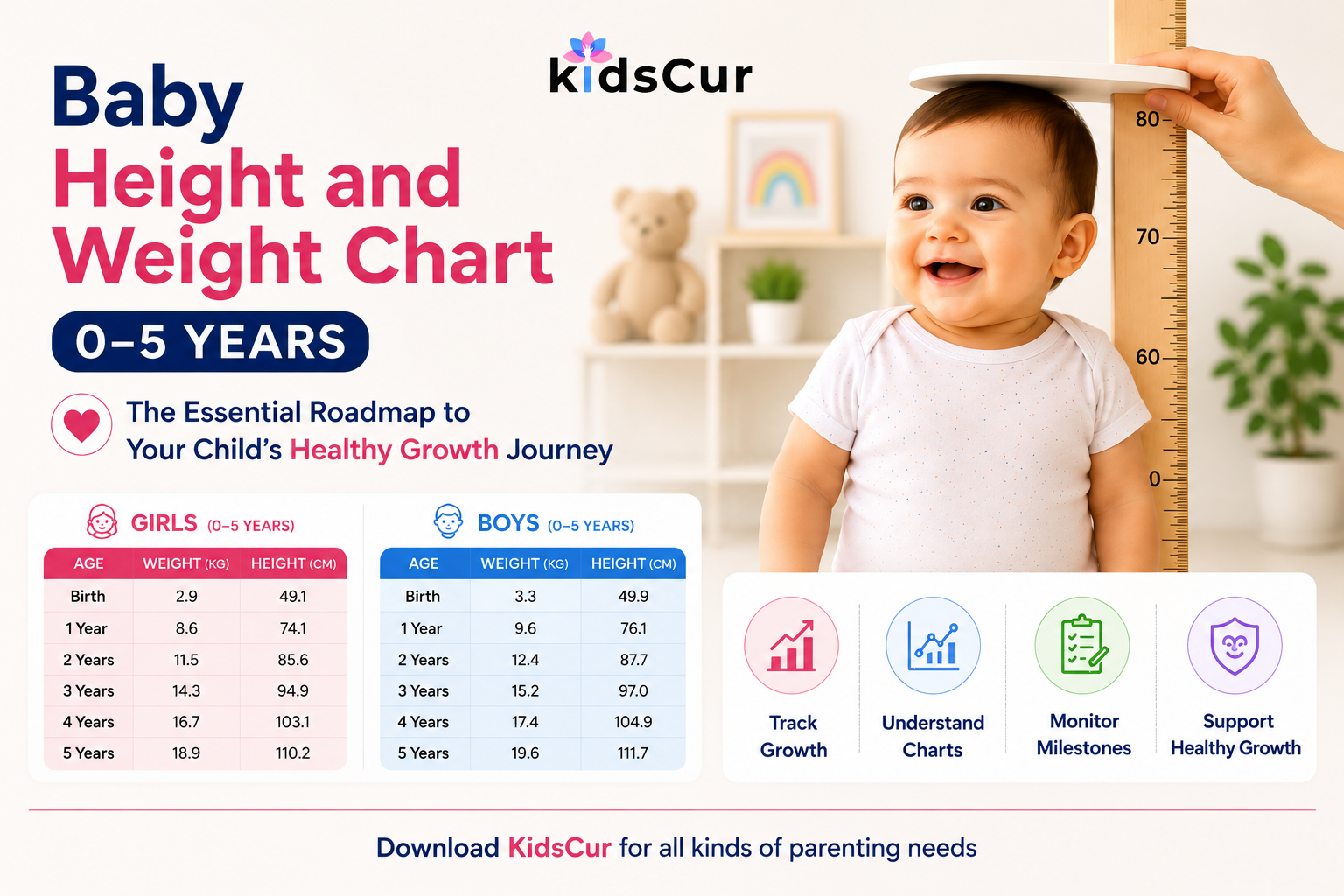
A baby height and weight chart helps parents track how their child’s growth changes from birth to 5 years.As a result, it provides a simple way to follow important measurements such as height, weight, and other growth patterns over time. However, every child grows differently, so one measurement should not be used to judge a child’s overall health or development
Growth is not about reaching one particular number. Every child is unique, and children can grow at different rates. What matters most is understanding your child’s individual growth pattern and noticing how it changes over time.
In addition, this guide will help you understand growth charts, explore the WHO growth standards, discover other areas of your child’s development that you can track, and know when it may be helpful to talk to a pediatrician.
What Is a Baby Growth Chart?
A baby growth chart is a helpful tool for following changes in your child’s physical growth as they get older.
It can be used to track measurements such as:
- Length or height
- Weight
- Head circumference
- Weight-for-length or height
- BMI-for-age
The World Health Organization (WHO) Child Growth Standards provide reference standards for children from birth to 5 years.
A growth chart is not a pass-or-fail test. As a result, it helps parents and healthcare professionals understand how a child’s growth changes over time.
Baby Height and Weight Chart by Age: 0–5 Years
The WHO Child Growth Standards include separate growth charts for boys and girls.
For parents, length/height-for-age and weight-for-age charts can provide a useful overview of a child’s physical growth.
Baby Height and Weight Growth Chart for Girls
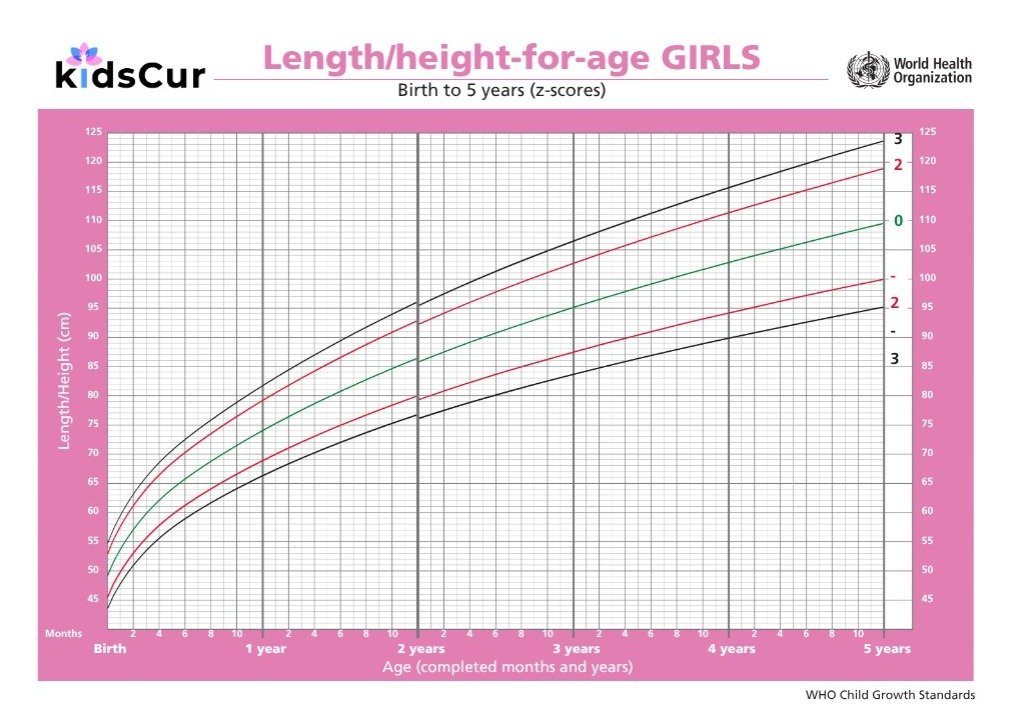
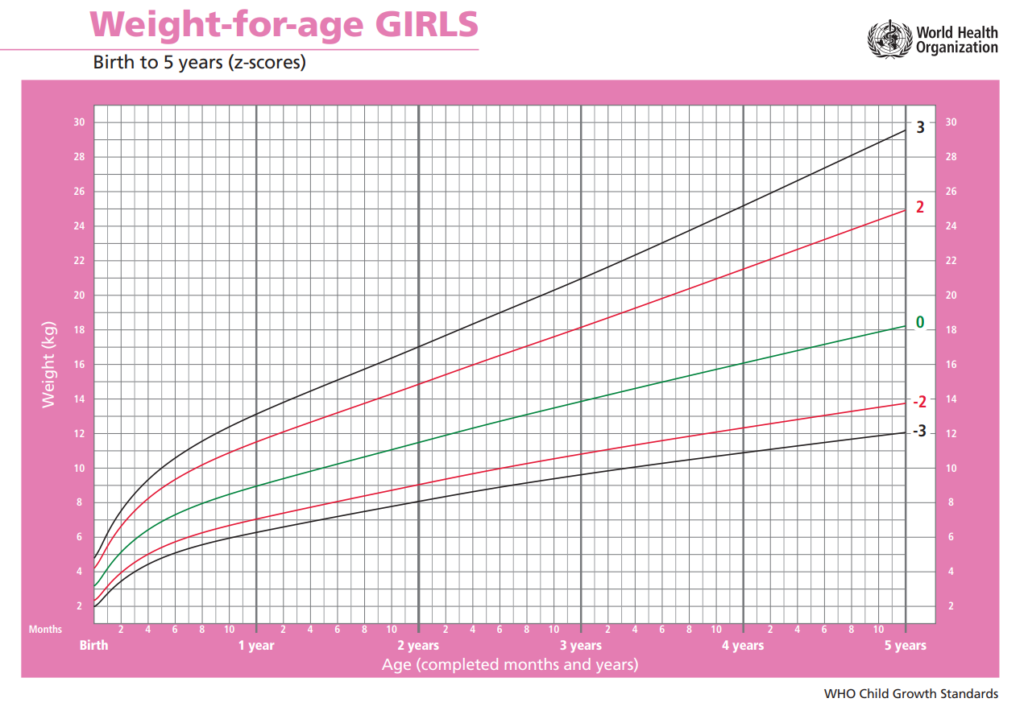
Using a baby height and weight chart can help parents follow changes in their child’s growth over time.
Baby Height and Weight Growth Chart for Boys
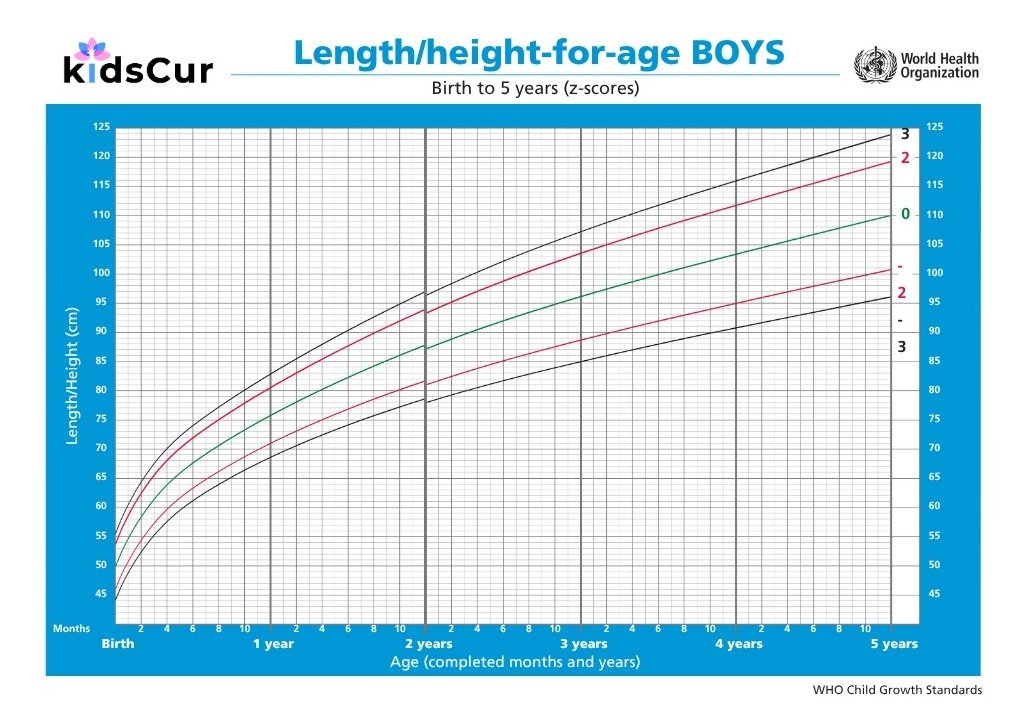
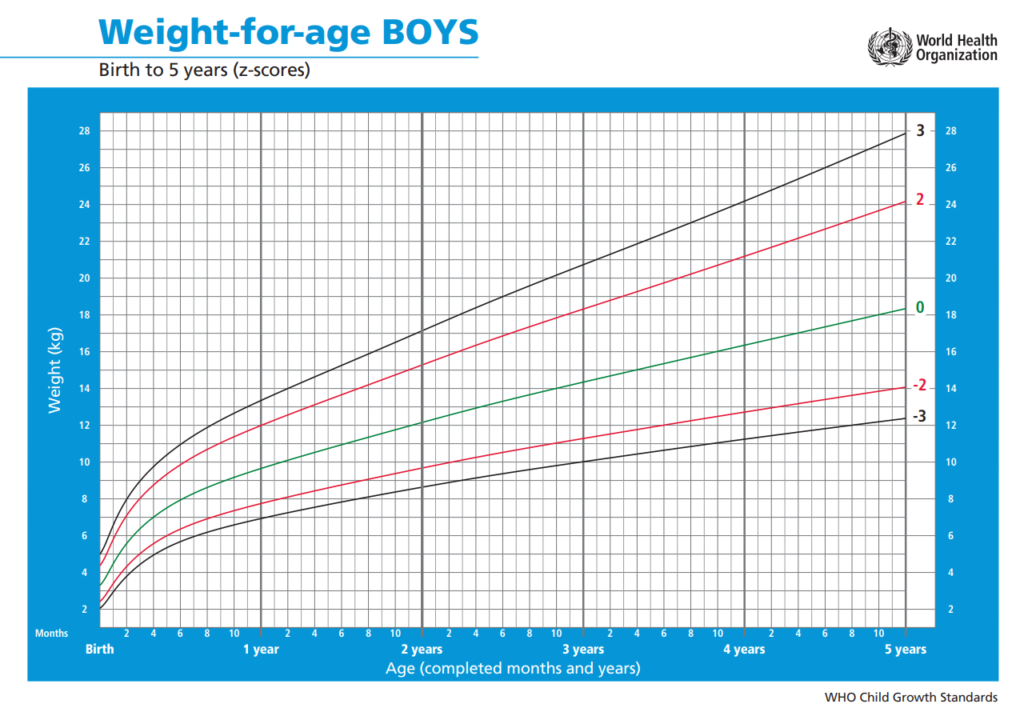
Important: These charts are reference tools and should not be used to diagnose a health condition. If you have concerns about your child’s growth, speak with a pediatrician.
How to Read a Baby Growth Chart
Growth charts can look complicated at first. However, you don’t need to understand every line to get the basic idea.
The chart usually shows your child’s age and a measurement such as height, length, or weight.
Your child’s measurement can then be compared with the growth pattern shown on the chart.
In simple terms, the chart helps you see how your child’s growth changes as they get older.
Why Is Growth Over Time More Important?
One measurement gives you only a snapshot.
On the other hand, several measurements over time tell a much bigger story.
For example, recording your child’s height and weight during regular check-ups can help you see whether their growth is continuing along a consistent pattern.
Therefore, don’t panic because of one measurement. Look at the trend, not just one number.
Does Every Child Need to Match the Average ?
No.
This is one of the most important things parents should remember.
Every child is unique. Two children of the same age may have different heights and weights and still be developing well.
Growth can be influenced by several factors, including:
- Genetics
- Nutrition
- Physical activity
- Overall health
- Family growth patterns
Because of this, comparing your child directly with another child is usually not helpful.
Height and Weight Are Only Part of Your Child’s Growth
When parents think about growth, height and weight often come first.
However, children develop in many different ways.
It can also be useful to keep track of:
- Developmental milestones
- Head circumference
- Vaccinations
- Nutrition
- Doctor visits
- Health records
- Important changes in your child’s health
Don’t Forget Developmental Milestones
Your child’s development isn’t measured only in centimetres or kilograms.
As your baby grows, you may notice exciting new skills such as:
- Sitting
- Crawling
- Standing
- Walking
- Talking
- Playing
- Interacting with others
Every little milestone is an important part of your child’s journey.
Every child develops at their own pace. Therefore, keeping a simple record of these milestones can help you understand your child’s development and remember those special moments.
Why Should You Track Your Child’s Growth?
Children change quickly during the first few years.
You may remember your baby’s current weight or height. However, remembering every previous measurement can be difficult.
Keeping growth information in one place makes it easier to look back and see your child’s progress.
You can track:
- Previous height measurements
- Previous weight measurements
- Growth changes
- Developmental milestones
- Vaccination history
- Important health information
As a result, you can have a clearer record of your child’s growth when you need it.
This information can also be useful when discussing your child’s growth with a pediatrician.
Keep Your Child’s Health Information Organized
As your child grows, important health information can quickly add up, from growth measurements and vaccinations to milestones and doctor visits.
Keeping everything organized makes it easier to follow your child’s progress and find important information when you need it.
Track Your Child’s Growth with KidsCur
Keeping track of your child’s growth doesn’t have to mean using notebooks or scattered records.
KidsCur helps parents keep important child health information organized in one place.
Track Growth and Milestones
Record growth measurements and developmental milestones so you can easily look back at your child’s progress.
Keep Health Records Together
Organize important information such as vaccinations, growth details, and health records for easier access.
Be Ready for Doctor Visits
Having your child’s information organized can help you feel more prepared and confident during health
Download KidsCur today and make tracking your child’s growth easier.
Make Growth Tracking Easier
Tracking your child’s growth should give you confidence and peace of mind, not worry.
Instead of comparing your child with others, focus on their own progress and celebrate every little milestone.
Download KidsCur today and keep your child’s growth and health journey organized in one place.
There is no single normal height or weight for every baby. Children grow at different rates, so growth should be looked at over time.
Regular growth measurements can help you follow your baby’s progress. Your pediatrician can assess height, weight, development, and overall health.
No. Every child is unique. Instead, focus on your child’s own growth pattern and celebrate their progress over time.
Yes. KidsCur helps you track your child’s height, weight, growth, and milestones in one place, making it easier to follow their progress. Download KidsCur today!
