
It’s 2 a.m., your baby is crying for the third time tonight, and you’re standing over the crib wondering something. Are these baby teething symptoms, or something else entirely? Teething doesn’t come with a warning label. So most parents spend weeks second-guessing every fussy evening, every extra bit of drool, every refused meal — is it a tooth, or something to call the doctor about?
The good news: teething follows a fairly predictable pattern, both in timing and in signs. This guide walks through what teething actually looks like at each age. You’ll also learn which remedies genuinely help, what’s just an old wives’ tale, and when a symptom deserves a call to your pediatrician instead of a teething ring.
What Are Baby Teething Symptoms, Really?
A tooth pushes through the gum tissue, and this causes local inflammation, mild pain, and pressure. Think of it like the ache of a bruise working its way to the surface. Because of this, most teething symptoms stay limited to the mouth and the general fussiness that comes with mild, ongoing discomfort.
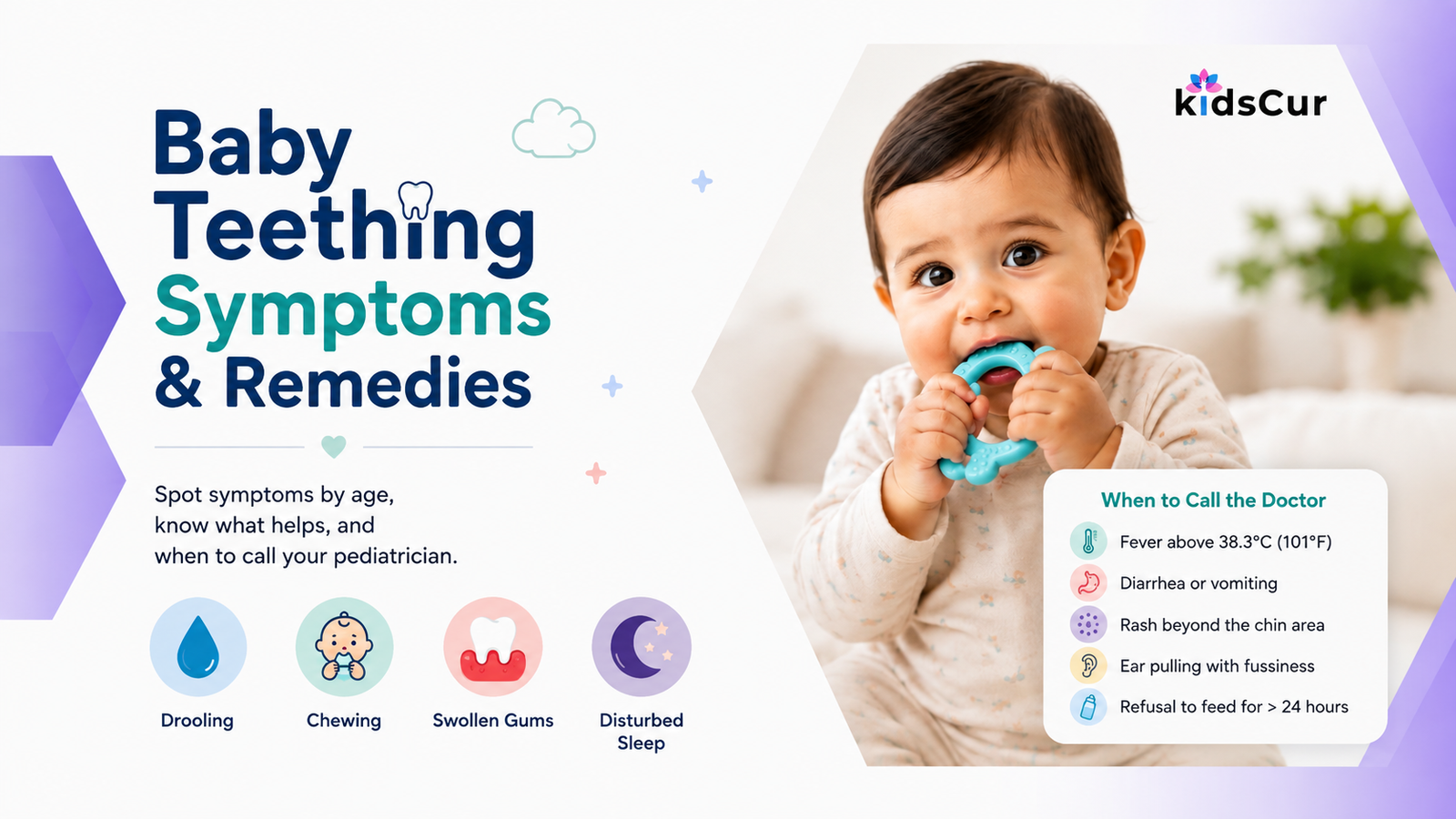
Common signs include:
- Increased drooling, often enough to need a bib change several times a day
- Gnawing or chewing on fingers, toys, or anything within reach
- Swollen or tender gums, sometimes with a visible bluish bump before a tooth emerges
- Mild irritability, especially in the evenings
- Slightly disrupted sleep, since gum pressure often feels worse lying down
- A mild, temporary dip in appetite, particularly for solid foods
However, it’s worth being clear about what teething doesn’t typically cause. This is where a lot of parental worry (and unnecessary home remedies) creeps in. High fever, diarrhea, vomiting, and rashes elsewhere on the body aren’t classic teething symptoms, even though people commonly blame them on it. If your baby has these, rule out an unrelated illness rather than assuming it’s just a tooth coming in.
Common Baby Teething Symptoms by Age
3 to 6 Months: Early Signs
Teething can start as early as 3 months for some babies. The first visible tooth usually doesn’t appear until closer to 6 months, though. In this window, you’ll typically notice increased drooling and a strong urge to chew on everything — hands, toys, even your shoulder during a cuddle. Babies this age can’t yet manage a full teething biscuit, so chilled (not frozen) silicone teethers work well.
6 to 12 Months: The First Teeth
Most babies cut their first tooth between 6 and 10 months — usually a bottom front incisor. The top front incisors follow shortly after. This is often the most uncomfortable stretch, since gum tissue is breaking through for the first time. Expect more noticeable fussiness, disrupted naps, and a temporary drop in feeding interest around each new tooth. By 12 months, most babies have 4 to 8 teeth.
12 to 18 Months: Molars Begin
The first molars typically arrive between 13 and 19 months. Because molars are larger and push through wider gum surfaces, this round tends to be more uncomfortable than the front teeth were. You may notice more intense chewing behavior and, in some babies, a brief return of night-waking even if they’d been sleeping through the night before.
18 to 24 Months: Canines and Second Molars
The final baby teeth — canines and second molars — usually come in between 16 and 33 months, often in a less predictable order than the earlier teeth. By age three, most children have their full set of 20 primary teeth. Teething-related fussiness typically tapers off for good around then.
Remedies That Actually Help
Not every remedy circulating on parenting forums actually eases baby teething symptoms — some genuinely help, others are outdated or even unsafe. Here’s what to reach for, and what to skip.
Effective, pediatrician-recommended options:
- Chilled (not frozen) teething rings — cold provides numbing relief, but fully frozen rings can be too hard on sensitive gums
- Gentle gum massage — a clean finger, gently rubbed along the gum line, offers quick relief for many babies
- Chilled washcloth — a clean, damp washcloth cooled in the fridge doubles as a safe chew toy
- Age-appropriate pain relief — if discomfort is significant, ask your pediatrician about an appropriate dose of infant paracetamol; never medicate without their guidance
- Extra cuddles and comfort — teething pain is real, and a fussier-than-usual baby often just needs more soothing than usual
What to avoid, despite being commonly suggested:
- Teething necklaces (amber or otherwise) — these pose a choking and strangulation risk, and pediatric associations don’t recommend them
- Teething gels with benzocaine — linked to a rare but serious condition affecting oxygen in the blood; most pediatric guidance now advises against them for infants and toddlers
- Frozen (rock-hard) teethers — can bruise sensitive gums rather than soothe them
- Rubbing alcohol or whiskey on gums — an old home remedy with no safety basis and real risk for infants
If you’re ever unsure whether a remedy is safe for your baby’s age, check with your pediatrician first. That’s always safer than trusting a forum thread. The Indian Academy of Pediatrics publishes age-specific guidance on infant care that’s worth bookmarking alongside your teething questions.
When to Call the Doctor
Because teething discomfort is usually mild, a few signs suggest it’s time to loop in your pediatrician rather than wait it out:
- Fever above 38.3°C (101°F) — teething alone rarely causes a true fever
- Persistent diarrhea or vomiting
- A rash that spreads beyond the chin and drool area
- Refusal to feed for more than a day
- Signs of ear pulling combined with fussiness, which can sometimes indicate an ear infection rather than teething
None of these mean panic is warranted — but they do mean it’s worth a call rather than assuming it will pass with the next tooth.
Keeping Track of Teething Milestones
Teeth don’t arrive on a fixed schedule, so it’s easy to lose track of which one came in when — especially across multiple children or a busy first year. Logging each tooth as it appears gives you (and your pediatrician) a clearer picture over time than trying to recall dates from memory months later. Track it alongside your baby’s other growth milestones and vaccination records for the fullest picture.
The KidsCur app holds onto exactly this kind of detail: log each tooth as it comes in alongside growth and vaccination records, so your baby’s full development story lives in one place instead of scattered across old photos and half-remembered dates.
FAQ
At what age do babies usually start teething? Most babies show early teething symptoms — like drooling and gum chewing — around 3 to 6 months. The first visible tooth typically appears between 6 and 10 months. Some babies teethe earlier or later, and both are normal.
Can teething cause a fever? Teething can cause a very mild rise in temperature. But a true fever above 38.3°C (101°F) isn’t a typical teething symptom, and it’s worth checking with your pediatrician.
How long do teething symptoms last for each tooth? Discomfort from an individual tooth usually lasts 3 to 5 days around the time it breaks through the gum. Some babies show milder symptoms for a week or more leading up to it.
Are teething necklaces safe? No — teething necklaces, amber or otherwise, carry choking and strangulation risks. Pediatric safety guidelines don’t recommend them. Chilled teething rings and gum massage are safer, equally effective alternatives.
Conclusion
Recognizing baby teething symptoms early makes the sleepless nights a little easier to get through. Knowing what’s normal at each stage means fewer 2 a.m. guessing games. Most of the time, a chilled teether and a bit of extra cuddling is genuinely all it takes.
If you’d rather not rely on memory to track which tooth came in when, the KidsCur app lets you log teething milestones alongside your baby’s growth and vaccination records — download it and keep the whole picture in one place.
