
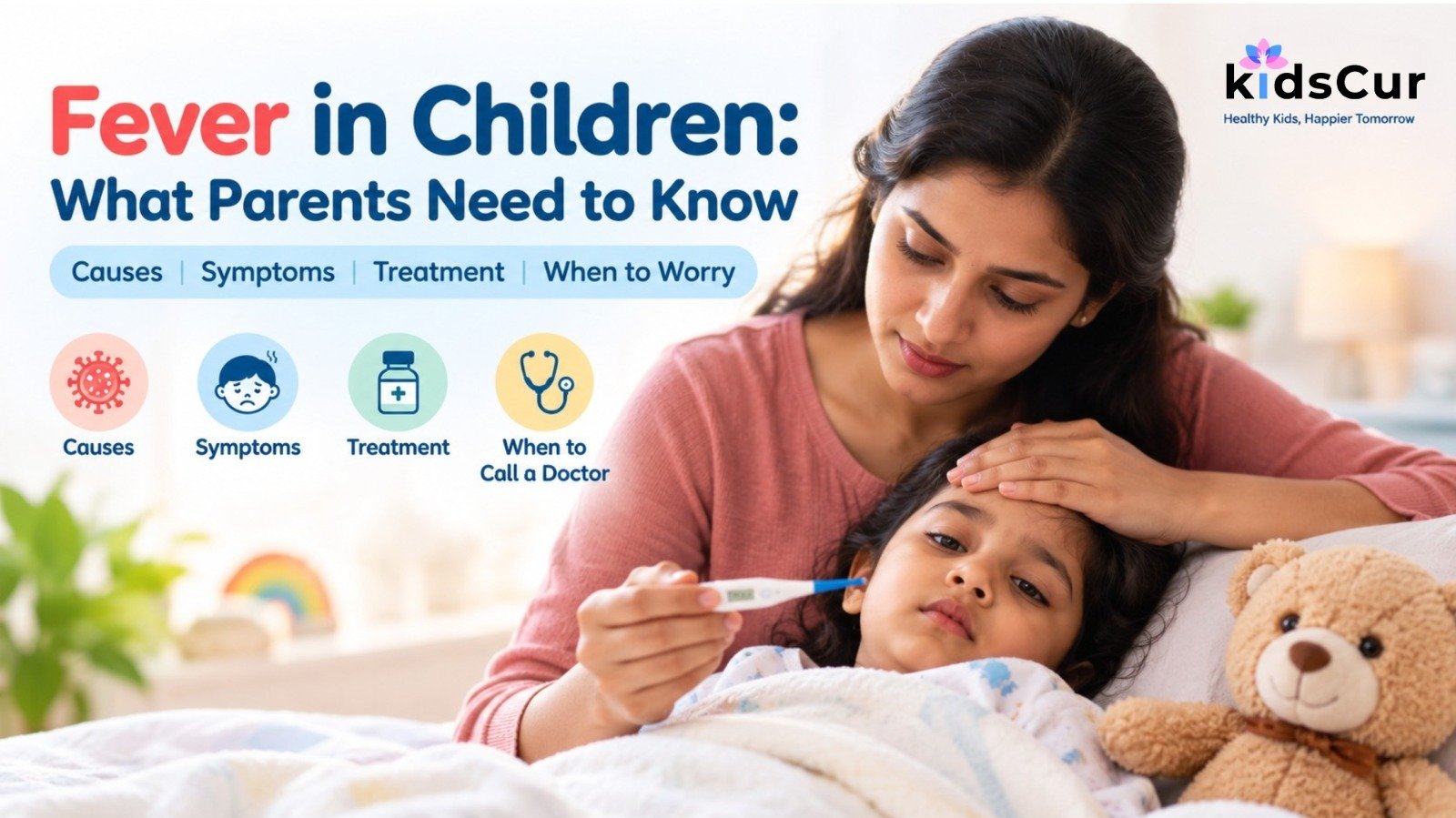
A spike on the thermometer can send any parent’s heart racing. Whether you’re dealing with a newborn’s first fever, a toddler fever that won’t seem to break, or a school-age child running warm after a day of sniffles, it helps to understand what’s actually happening inside your child’s body. In most cases, fever in children is a sign that the immune system is doing exactly what it’s designed to do. Here’s a complete guide to childhood fever — what causes it, how to treat it at home, and when it’s time to call a pediatrician.
What Counts as a Fever in Children?
Most healthcare providers define a fever as a body temperature of 100.4°F (38°C) or higher, measured rectally. This threshold is the standard used by pediatricians to determine whether a child’s temperature qualifies as a true fever versus normal day-to-day fluctuation.
Your child’s body is constantly working to keep internal temperature steady, using the brain, skin, muscles, and blood vessels as its control system. This natural thermoregulation process fine-tunes body heat by:
- Increasing or decreasing sweat production
- Moving blood closer to or away from the skin’s surface
- Holding onto or releasing water in the body
- Seeking out a cooler or warmer environment
When a fever hits, your child’s body isn’t malfunctioning — it’s temporarily resetting its internal thermostat to a higher setting. This fever response happens because:
- The body releases chemicals called cytokines and mediators in response to a virus, bacteria, or other invader
- It ramps up production of macrophages, immune cells that “eat up” the invading organism
- It works to build natural antibodies that will recognize and fight off the same infection more quickly in the future
- Some bacteria are wrapped in a protective outer membrane; when that membrane breaks down, the released contents can be toxic and signal the brain to raise body temperature further
Common Causes of Fever in Kids
A fever in children can be triggered by a wide range of conditions, including:
- Common infectious diseases (colds, flu, ear infections, strep throat, stomach viruses)
- Certain medications
- Heat stroke or overheating
- A blood transfusion
- Disorders of the brain
- Some types of cancer
- Some autoimmune diseases
Because fever is such a broad symptom, pinpointing the exact cause often depends on what other symptoms accompany it — cough and congestion point toward a respiratory infection, while ear tugging or fussiness might suggest an ear infection, for example.
Why Fever in Children Is Actually a Good Sign
Here’s the reassuring part: fever isn’t an illness — it’s a symptom. It’s a sign your child’s immune system is actively fighting something off, sending white blood cells and other “fighter” cells into battle against infection. Trying to eliminate every degree of fever isn’t the goal; managing your child’s comfort while their body does its job is.
Recognizing Fever Symptoms in Children
Beyond a measured temperature above 100.4°F (38°C), watch for these common signs of fever in kids:
- Lower energy or less chatter than usual
- Fussiness, reduced appetite, or increased thirst
- Skin that feels warm or hot to the touch (though how “hot” your child feels isn’t always a reliable guide to the actual number — always confirm with a thermometer)
- Flushed cheeks or a glassy-eyed look
- Clinginess or a change in usual behavior
An important note for infants: these symptoms can overlap with other medical conditions, so a thermometer reading is the most reliable indicator. The American Academy of Pediatrics advises that if your child is younger than 3 months old and has a temperature of 100.4°F (38°C) or higher, call your pediatrician right away. When in doubt, your child’s healthcare provider is always the right call.
How to Take a Child’s Temperature Accurately
Getting an accurate reading matters, especially in babies and young children. A few common methods parents use:
- Rectal thermometers are considered the most accurate for infants and toddlers and are the standard reference point for the 100.4°F (38°C) fever threshold.
- Oral thermometers work well for children old enough to hold a thermometer under the tongue without biting down, typically age 4 and up.
- Ear (tympanic) thermometers are quick but can be less accurate in very young infants or if there’s earwax buildup.
- Forehead (temporal) thermometers are convenient for a quick check but may run slightly lower than rectal readings.
- Underarm (axillary) thermometers are the least precise but can be useful as a fast screening tool.
Whichever method you use, try to stay consistent so you can track whether your child’s fever is trending up, down, or holding steady.
Does Every Fever in Children Need Treatment?
Only if it’s making your child uncomfortable. Treating a fever won’t help your child’s body clear the infection any faster — it simply eases discomfort so your child can rest, eat, and drink more easily.
Febrile Seizures: What Parents Should Know
Children between 6 months and 5 years old can sometimes have febrile seizures during a rapid rise in temperature. Watching your child have a seizure is frightening, but here’s what’s important to understand:
- Febrile seizures are usually brief, lasting a few minutes.
- If this happens to your child, know that it can recur with future fevers, but most kids outgrow them by school age.
- A febrile seizure does not mean your child has epilepsy.
- Treating the fever itself with medication hasn’t been shown to lower the risk of a febrile seizure happening — the seizure is triggered by how quickly the temperature rises, not by the height of the number itself.
If your child ever has a seizure lasting more than five minutes, or has trouble breathing afterward, seek emergency care immediately.
Fever Myths vs. Facts
There’s a lot of outdated advice floating around about childhood fever. A few common myths worth clearing up:
- Myth: A high fever number always means a serious illness. Fact: The height of the fever doesn’t necessarily correlate with how serious the underlying illness is. A child’s overall behavior and hydration matter more than the exact number.
- Myth: You should wake a sleeping child to give fever medicine. Fact: Sleep is valuable for recovery — if your child is resting comfortably, there’s usually no need to wake them just to treat the fever.
- Myth: Fever alone can cause brain damage. Fact: Fevers caused by common childhood illnesses, even fairly high ones, do not cause brain damage on their own.
How to Reduce a Fever at Home
- Fever-reducing medicine: Acetaminophen or ibuprofen can help ease discomfort. Always follow your pediatrician’s dosing guidance based on your child’s age and weight. Never give aspirin to a child — it’s been linked to Reye syndrome, a rare but serious and potentially fatal condition.
- Dress your child lightly. Bundling up in heavy clothing or blankets traps body heat and can push the temperature higher.
- Keep fluids coming. Water, diluted juice, an electrolyte drink, or popsicles all help prevent dehydration, which is one of the bigger risks during a childhood fever.
- A lukewarm bath can help, but never let your child shiver from cold water, as shivering can actually raise body temperature further. Never leave a child unattended in the bathtub, even briefly.
- Skip alcohol baths entirely — they’re not a safe way to cool a child down and can be absorbed through the skin.
- Encourage rest. A quiet, calm environment supports the body’s natural recovery process.
When to Call a Healthcare Provider
Reach out right away if:
- Your child is 3 months old or younger and has a fever of 100.4°F (38°C) or higher — this needs prompt medical attention, since fever in a young baby can signal a serious infection.
- Your child, at any age, has repeated fevers above 104°F (40°C).
- Your child is under 2 years old and a fever of 100.4°F (38°C) or higher lasts more than 1 day.
- Your child is 2 years or older and a fever of 100.4°F (38°C) or higher lasts more than 3 days.
- Your baby is fussy, crying, and can’t be soothed.
- Your child shows signs of dehydration, such as fewer wet diapers, dry lips, or no tears when crying.
- Your child has a stiff neck, severe headache, difficulty breathing, or a rash along with the fever.
Frequently Asked Questions About Fever in Children
Is a low-grade fever in a child something to worry about? A low-grade fever (generally under 102°F/38.9°C) that doesn’t come with other worrying symptoms is often manageable at home, especially in children older than 3 months. Monitor how your child is acting and feeding.
How long does a typical childhood fever last? Most fevers linked to common viral infections resolve within 2–4 days as the body clears the illness. A fever lasting longer than the timeframes outlined above warrants a call to your provider.
Can teething cause a fever in babies? Teething may cause a very slight rise in temperature, but it typically doesn’t cause a true fever of 100.4°F (38°C) or higher. If your teething baby has a real fever, look for another underlying cause.
Should I alternate acetaminophen and ibuprofen for a stubborn fever? Talk with your child’s healthcare provider before combining or alternating fever medicines — they can guide you on safe, appropriate use for your child’s age and weight.
This article is for general information and doesn’t replace medical advice. If you’re unsure whether your child’s fever needs an in-person visit, Kidscur can help you decide — book a same-day appointment or message your care team for guidance.
