
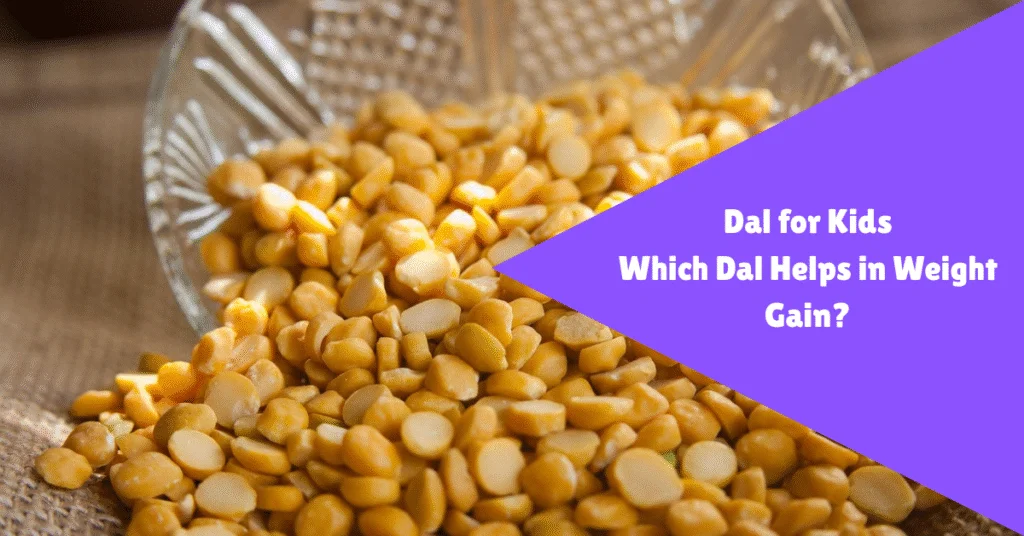
Which dal helps in weight gain? Moong, masoor, toor, chana and urad dal all help children gain weight in a healthy way, because they provide protein, calories and iron. For babies, split yellow moong dal is the easiest to digest and the best first choice. No single dal works on its own. The results come from serving dal regularly, in the right amounts, with a little ghee and a carbohydrate such as rice.
If your child is on the thin side, the question “which dal is good for weight gain?” is a natural one. Dal is affordable, easy to cook and already part of most Indian kitchens. This guide explains which dals work best, how they compare, how much to give at each age, and how to cook them so they add calories as well as protein.
Why dal helps in weight gain in children
Healthy weight gain in a child needs enough calories, enough protein and enough of the vitamins and minerals that help the body use them. Dal helps with all three:
- Protein for growth. Lentils are one of the main plant protein sources in an Indian diet. Protein helps build muscle and supports normal growth.
- Energy. Dal contains complex carbohydrates that give steady energy, and its calories add up quickly once you add ghee or serve it with rice.
- Iron, folate and zinc. These support blood health, appetite and immunity. Iron is especially important for babies after six months.
- Fibre. It supports digestion, which matters because constipation or an upset stomach can reduce a child’s appetite.
A useful point to remember: dal alone is not a complete protein, but dal with rice or roti is. This is why traditional pairings like dal-chawal and dal-roti work so well for growing children.
Which dal helps in weight gain? The 5 best dals
1. Moong dal (split yellow gram)
Moong dal is the best first dal for babies. It is light, quick to cook and gentle on the stomach, so it is less likely to cause gas than heavier lentils. It is a good source of protein and folate.
Best for: babies starting solids from 6 months, and children with sensitive digestion.
2. Masoor dal (red lentils)
Masoor dal cooks in about 15 to 20 minutes, breaks down to a smooth consistency and is rich in iron and protein. It is a good choice for toddlers and for children who are slightly underweight.
Best for: toddlers and busy parents who need a quick meal.
3. Toor dal (arhar dal)
Toor dal is the base of everyday dal in many Indian homes. It has plenty of protein and is filling. Cook it until it is completely soft and mash or blend it for younger children.
Best for: toddlers and older children as part of a regular meal.
4. Chana dal (split Bengal gram)
Chana dal is one of the more calorie-dense dals and is high in protein and fibre. It takes longer to cook and can cause gas in some children, so soak it for a few hours and introduce it in small amounts.
Best for: children over 2 who need more calories and eat well-cooked food comfortably.
5. Urad dal (black gram)
Urad dal is heavier, rich and filling, and is a good source of protein and iron. Because it is heavier, give small portions at first and cook it well. See our guide on white urad dal and health and black urad dal for more detail.
Best for: older toddlers and children, in small, well-cooked portions.
Which dal helps in weight gain most? Comparison at a glance
Values are approximate for 100 g of raw, dry dal and vary slightly between sources and brands.
This comparison shows which dal helps in weight gain most quickly, though digestibility matters as much as calories.
| Dal | Calories (approx.) | Protein (approx.) | Digestibility | Best age to start |
|---|---|---|---|---|
| Moong dal | 345 kcal | 24 g | Very easy | 6 months |
| Masoor dal | 350 kcal | 25 g | Easy | 7 to 8 months |
| Toor dal | 340 kcal | 22 g | Moderate | 8 to 9 months |
| Chana dal | 365 kcal | 22 g | Heavier | 12 months and above |
| Urad dal | 340 kcal | 25 g | Heavier | 10 to 12 months and above |
Cooked dal contains much more water, so the calories and protein per serving are far lower than the raw figures. The table is for comparing dals with each other, not for measuring portions.
How much dal should you give? Age-wise guide
Every child is different, so treat these as a starting point and follow your paediatrician’s advice.
- 6 to 8 months: Start with 1 to 2 tablespoons of well-cooked, mashed or strained moong dal, once a day. Increase slowly as your baby accepts it.
- 9 to 12 months: Offer thicker, mashed dal with rice or khichdi, about 3 to 4 tablespoons per meal.
- 1 to 3 years: Offer roughly half a small bowl of dal with rice or roti once or twice a day.
- 4 years and above: A small to medium bowl of dal as part of a balanced meal.
When introducing a new dal to a baby, give one new food at a time and wait about three days before adding another, so you can notice any reaction.
How to cook dal so it adds more calories
The way you prepare dal changes how much it helps with weight gain. These simple changes add energy without making the food heavy:
- Add ghee. A teaspoon of ghee per serving adds healthy fat and calories, and most children like the taste.
- Pair with rice or roti. This gives a complete protein and more energy per meal.
- Make khichdi. Dal and rice cooked together with vegetables is soft, nutritious and easy to eat.
- Cook it thick. Thin dal water fills a small stomach with little energy. Thicker dal gives more nutrition per spoonful.
- Add vegetables. Carrot, pumpkin, bottle gourd and spinach add vitamins and flavour. See our list of vegetables for weight gain in India.
- Add a little vitamin C. A squeeze of lemon or a side of fruit helps the body absorb the iron in dal.
Easy recipe: moong dal khichdi for babies and toddlers
Ingredients: 2 tablespoons split yellow moong dal, 2 tablespoons rice, 1 small carrot (grated), 1 teaspoon ghee, a pinch of turmeric, 1 cup water.
Method: Wash the dal and rice together. Cook them with the carrot, turmeric and water in a pressure cooker for 3 to 4 whistles until very soft. Mash well, stir in the ghee and serve warm. For babies under 12 months, do not add salt.
Mistakes to avoid
- Giving only dal water. It has little nutrition compared with the cooked dal itself.
- Adding salt, sugar or honey to a baby’s food. Salt and sugar are not recommended for babies, and honey should not be given before 12 months.
- Starting with heavy dals. Begin with moong, then add others slowly.
- Overcooking or undercooking. Undercooked dal is hard to digest. Cook until it mashes easily between your fingers.
- Expecting dal to do everything. Weight gain needs a varied diet with grains, vegetables, fruit, dairy or other protein sources, and healthy fats.
- Forcing the child to eat. Pressure at mealtimes can make fussy eating worse. Offer food calmly and regularly.
When to talk to a doctor
Dal can support healthy weight gain, but it is not a treatment for underweight or poor growth. Speak to your paediatrician if:
- Your child is not gaining weight or is losing weight
- Your child’s weight is consistently below the expected range on a growth chart
- Your child has frequent vomiting, diarrhoea or constipation
- Your child refuses most foods or shows signs of an allergy, such as rashes, swelling or breathing trouble after eating
- You are unsure which foods are safe for a baby with a medical condition
A doctor can check whether poor weight gain is a feeding issue or has a medical cause and suggest a plan for your child.
Frequently asked questions
Which dal helps in weight gain the most?
Chana dal has slightly more calories than other dals, but moong, masoor, toor and urad dal also support weight gain. The best choice is the one your child digests well and eats regularly. For babies, start with moong dal.
Which dal is good for baby weight gain?
Split yellow moong dal is the best first choice. It is light and easy to digest. Once your baby is comfortable with it, you can add masoor and toor dal, and later chana and urad dal.
Can I give dal to my baby every day?
Yes, in age-appropriate amounts, as part of a varied diet. Rotate different dals and add other foods such as vegetables, grains and fruit so your baby gets a wide range of nutrients.
Which dal is best for weight gain in adults?
The same dals help adults too. For adults, weight gain depends on total calories, so combine dal with rice, ghee, nuts, paneer or curd. This article focuses on children, so adults with concerns should speak to a doctor or dietitian.
Is dal enough for a child to gain weight?
No. Dal is a valuable part of a child’s diet, but healthy weight gain needs a balanced mix of grains, vegetables, fruit, healthy fats and protein from different sources. Read more in our guide to healthy foods to gain weight.
Can dal cause gas in babies?
Some dals, especially chana and urad, can cause gas in some children. Soak them, cook them well, start with small amounts and introduce them after your baby is comfortable with lighter dals like moong.
Key takeaways
Which dal helps in weight gain best?
- Chana dal has slightly more calories, but moong, masoor, toor and urad dal also work well.
- Start babies on moong dal and add heavier dals gradually.
- Ghee, rice, vegetables and thick consistency make dal more filling and nutritious.
- Dal works best as part of a balanced diet, not on its own.
- If your child is not gaining weight, speak to a paediatrician.
Disclaimer: This article is for general information and is not medical advice. Every child is different, so consult your paediatrician before changing your child’s diet, especially for babies under 12 months or children with allergies or medical conditions.
